Dragon's Dogma 2: Dark Arisen Expansion Review and Key Updates
Discover the latest on the Dragon's Dogma 2: Dark Arisen expansion, including the new Norgan region, gameplay improvements, and expert insights on the base game.
Published: Dragon's Dogma 2 Wiki Editorial Team
Table of Contents
Understanding the Dark Arisen Expansion for Dragon's Dogma 2
The release of Dragon's Dogma 2: Dark Arisen marks a significant milestone for the franchise, aiming to address player feedback regarding the base game's endgame depth and difficulty. Unlike the original Dragon's Dogma expansion, which was widely credited with "fixing" the base game's technical shortcomings, Dark Arisen 2 functions as a massive content injection. Much of the technical heavy lifting, such as performance optimization and the addition of an infinite fast-travel item, was handled through incremental patches prior to the expansion's launch.
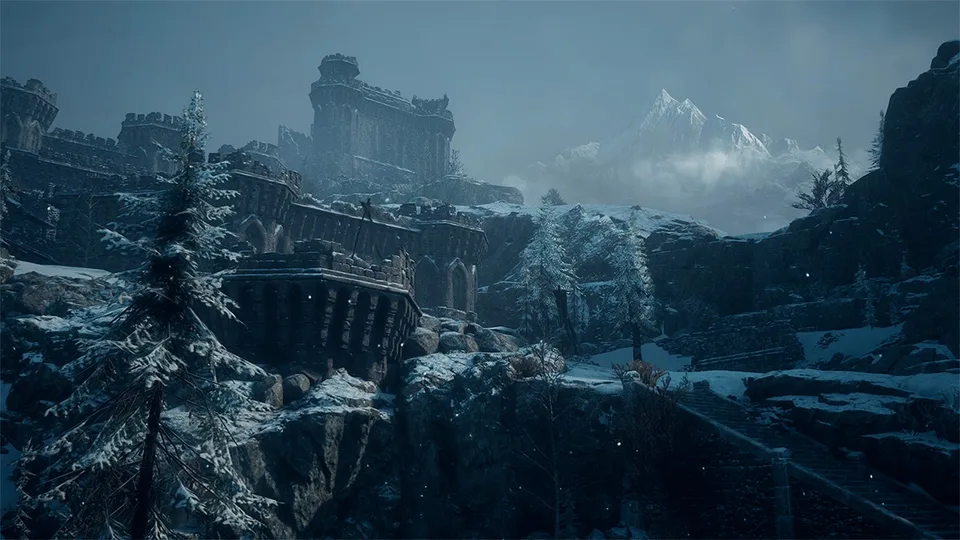
The core of the expansion is the Norgan region, an Icelandic-inspired frozen landscape that emphasizes verticality and survival mechanics. Players should note that while the expansion provides a polished 25–30 hour experience, it does not fundamentally rewrite the base game's narrative structure. Instead, it offers a more cohesive story within its own borders, featuring a tighter cast of characters and a clear progression path.
The Norgan Region: Exploration and Survival
Norgan is designed to challenge players who have reached levels 40–50. Its geography is dense, utilizing interconnected cave systems and high-altitude peaks that feel more akin to a Metroidvania-style design than the open plains of Vermund.
Tip
Navigation in Norgan is heavily influenced by the environment. Keep an eye out for climbable poles to utilize grappling hooks, which are essential for bridging elevation gaps when paths are blocked by snow.
The region introduces a "cold" mechanic that depletes max stamina during blizzards. Players must manage this by utilizing cold-resistant gear or specific consumables. During these whiteouts, the mini-map is disabled, forcing players to rely on environmental cues and careful exploration. This design choice successfully preserves the sense of primal survival that many fans associate with the series' most memorable moments.
New Gameplay Systems: Spoils and Combat
One of the most debated additions in Dark Arisen is the "Spoils" system. These mystery items are recovered from enemies and chests, requiring appraisal to reveal randomized stats and passive perks.
Appraisal: Take your unidentified Spoils to specific NPCs to reveal gear.
Perks: Look for modifiers that enhance specific vocation skills, such as adding explosive properties to rogue abilities.
Build Crafting: Use the randomization to experiment with unique setups that were previously impossible in the base game.
While the system adds a layer of depth to the loot chase, some players feel the process can become repetitive. However, for those looking to min-max their characters, these randomized perks provide the necessary variance to keep late-game combat engaging. Additionally, new class abilities can be unlocked at obelisks throughout Norgan, further expanding the tactical options for each vocation.
Base Game Enhancements and Lost Rites
Beyond the new region, the Dark Arisen update brings changes to the broader Dragon's Dogma 2 experience. The most notable inclusion is the set of 12 "Lost Rites" dungeons.
Access: Reach the required level or story milestone to unlock these dungeons scattered across the mainland.
Preparation: Check for entry conditions; some dungeons restrict specific vocations or require specific inventory items.
Execution: Clear the gauntlet to earn offering flames, which are used to unlock higher-tier vocation skills.
These dungeons provide a welcome break from the standard open-world exploration. While some are straightforward combat challenges, others require players to manipulate the environment or solve puzzles to progress. The introduction of a hard mode also assists in keeping the mid-to-late game encounters relevant, although community reports suggest that high-level characters may still find base game content trivial even with these adjustments.
FAQ: Frequently Asked Questions
Does Dark Arisen fix the base game's story?
While the Norgan region features a tighter, more cohesive narrative with satisfying payoffs, the base game's original story remains largely unchanged. The expansion provides a superior narrative experience within its own contained campaign.
Is the performance improved?
Yes, recent updates have significantly bolstered performance. PC players report a roughly 30% increase in stability, and consoles now benefit from a more consistent 60 FPS performance mode.
Can I access Norgan immediately?
The expansion is intended for players around levels 40–50. While you can technically travel there, the difficulty curve is balanced for those who have finished or are nearing the end of the base campaign.
For those looking to dive into the official Steam page for Dragon's Dogma 2, ensure your system meets the updated requirements to fully enjoy the performance optimizations brought by recent patches. Whether you are returning to the world of the Arisen or starting your journey anew, Dark Arisen offers a substantial, albeit focused, expansion to the core experience.