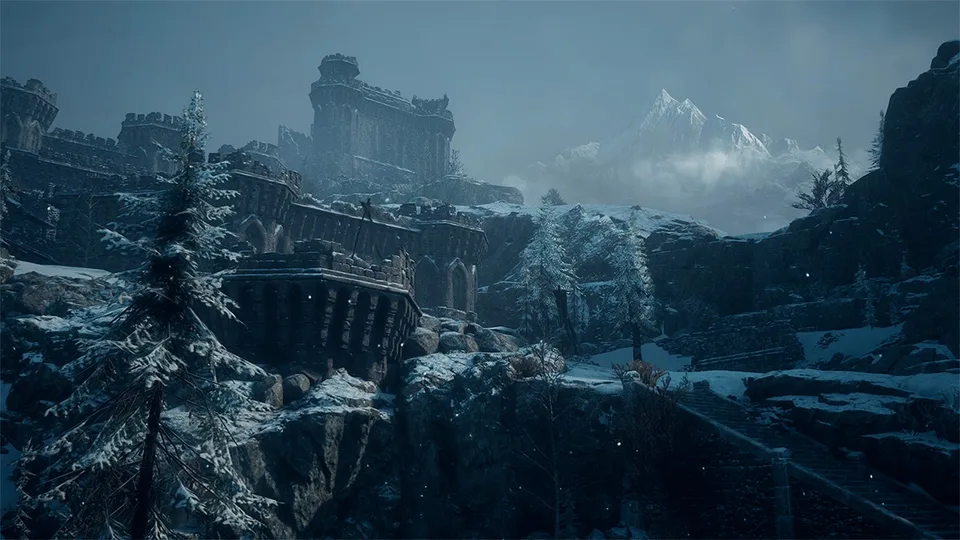
Dragon's Dogma 2 Review: A Deep Dive Into Capcom's Unconventional RPG
Explore our in-depth review of Dragon's Dogma 2. Discover why this bold, often obtuse, and mechanically rich action RPG is a must-play for fans of emergent gameplay.
Published: Dragon's Dogma 2 Wiki Editorial Team
Table of Contents
Is Dragon's Dogma 2 Worth Your Time?
Dragon's Dogma 2 is a rare breed of modern AAA gaming—a title that refuses to conform to the industry's standard "checklist" design. Developed by CAPCOM Co., Ltd., this sequel arrives nearly 12 years after the original, maintaining the weird, janky, yet utterly enthralling spirit of its predecessor. If you are looking for a game that trusts you to figure things out without constant tutorial pop-ups or objective markers, this is likely the experience you have been waiting for.
The game is an action RPG that excels in systemic interaction. Whether it is the way you climb massive beasts to target their weak points or how the world reacts to your choices, the game provides a level of freedom rarely seen in titles of this scale. It is not a perfect game, but it is an intriguing one.
The Unique Pawn System Explained
One of the defining features of the Dragon's Dogma series is the Pawn system. You are accompanied by a party of three AI-controlled allies. You design one "Main Pawn" yourself, while the other two are guests recruited via Rift Stones.
Managing Your Pawns
Main Pawn: Your permanent companion that you customize. They level up alongside you and gain experience throughout your journey.
Guest Pawns: Recruited from other players or Capcom-provided profiles. They do not gain experience in your world, meaning you must swap them out periodically to keep your party effective.
Commands: While you have limited direct control (four vague commands like "Come here" or "Help"), a well-built team acts with surprising intelligence, often turning the tide of chaotic battles.
Combat, Exploration, and Emergent Gameplay
Combat in Dragon's Dogma 2 is visceral and physics-driven. Unlike many contemporary RPGs that rely on lock-on mechanics or dodge buttons, this game requires you to interact with the environment. You can grab enemies, topple them, or climb onto monsters to deliver finishing blows.
Tip
The world is dense with enemies like wolves, goblins, and massive griffins. Because the combat is incidental to exploration rather than a scripted driving force, you must be prepared for ambushes at any time. Always keep an eye on your party's health, as it drains via "scratch damage" that can only be fully restored by resting at an inn or setting up camp.
The open world is vast and rewards curiosity. Much like Elden Ring, the game hides significant secrets off the beaten path. You won't find a map cluttered with icons; instead, you navigate by landmarks and your own intuition.
Performance and Technical Observations
Based on community reports and initial playtests, performance is a significant talking point. While the game is stunning to behold, the frame rate can struggle, particularly in high-density areas like major cities.
Console Experience: Expect a stable 30 FPS in most wilderness areas, with noticeable dips in cities. There is currently no "Performance Mode" to boost frame rates on consoles.
PC Performance: Generally offers the best opportunity to push for 60 FPS, though hardware requirements are substantial.
Bugs vs. Jank: It is important to distinguish between actual bugs and "jank." You may encounter odd character animations or NPCs pathing awkwardly—this is part of the game's idiosyncratic charm rather than technical failure.
Mastering Quest Design
The quest design in Dragon's Dogma 2 is intentionally obtuse. The game rarely holds your hand, and there is no "Bethesda-style" dialogue tree to guide your choices.
Identify the Objective: Most quests provide a general area rather than a specific waypoint.
Experiment: If a quest seems stuck, look for alternative solutions. For example, in the "Hunt for the Jadeite Orb" quest, you can use an item forger to create a duplicate to satisfy multiple NPCs.
Accept Consequences: The game does not allow for easy reloads if you fail a quest. If an escort dies or you make a poor choice, the story moves forward regardless. This level of consequence is what makes your individual playthrough feel personal and meaningful.
FAQ: Common Player Questions
Is there multiplayer in Dragon's Dogma 2?
No, this is a strictly single-player experience. The Pawn system serves as an asynchronous multiplayer element, allowing you to "borrow" other players' creations, but you will never control a character alongside another human player in real-time.
Does the game require me to play the first one?
While knowing the lore of the original 2012 game adds context, it is not strictly required. The sequel is designed to be accessible, though its lack of hand-holding might be disorienting for players used to more guided modern RPGs.
Are there fast travel options?
Fast travel is intentionally limited to maintain the sense of scale and danger. You can use oxcarts to travel between major cities or rare Ferrystones for instant teleportation, but you should expect to do a significant amount of hiking through the beautiful, dangerous world.